First things first
When a tree or a big limb comes down, the priority is people, then property. The tree can wait a few minutes while you check these.
- Get everyone clear. Keep people, children and pets well away from the fallen tree and from anything still hanging in the canopy above. Broken limbs can stay caught for hours and then drop without warning.
- Look for wires before you go near it. If the tree or a branch is touching, or lying near, the power line to the house or a street line, stay at least 8 metres back and treat every wire as live. Call Western Power on 13 13 51 to report it. If anyone is hurt, trapped or in danger, call 000.
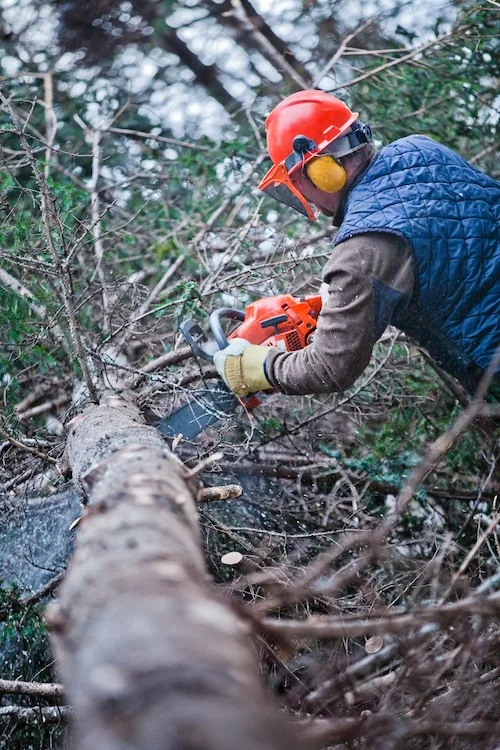
- Do not try to cut it yourself. A fallen trunk or a limb resting on a roof is often under tension. Cut in the wrong place, it can spring, roll or drop further. Chainsaw work on storm-damaged wood is one of the more dangerous jobs in tree work, even for people who do it often.
- Stop water getting in if you can do it safely. If the roof is broken and it is raining, move valuables away from the leak. Leave climbing onto a damaged roof to the professionals.
- Take photos. Before anything is moved, see the insurance section below.
- Call us. Tell us what has fallen, what it is resting on, whether any wires are involved and how the arborist can get in. A photo sent through the form helps a lot. We are open 7 days, 8am to 5pm.
Perth's two storm seasons
Most emergency tree work in Perth comes in two waves.
Winter fronts
From late autumn through winter, cold fronts come in off the Indian Ocean with strong, gusty north-westerly winds and heavy rain. The first big front of the year tends to be the worst for trees, because it finds all the weak limbs and dead wood that built up over summer. Rain softens sandy soil around the roots at the same time, so shallow-rooted trees and trees with root damage can tip over whole, lifting a plate of soil and roots out of the ground.
Summer limb drop and storms
Eucalypts can drop large limbs on hot, still days with no wind at all. It is a known habit of several gum species, particularly in long hot spells, and it catches people out because the branch that fell often looked healthy. Summer also brings the occasional thunderstorm with sudden, strong downdrafts that can snap limbs and split trees over a small area.
Common storm jobs
A tree or limb on the roof
The arborist has to take the weight off the roof without letting it drop or slide further. Usually the tree is cut back in stages from the top, with pieces tied off and lowered on ropes, or lifted clear with a crane on bigger jobs. Once the weight is off, the roofer or builder can assess the damage. Covering the hole with a tarp and fixing the roof are normally jobs for a roofer or your insurer's repairer, not the arborist.
A tree across the fence
Fence damage often involves two properties, so talk to your neighbour early. The fallen part is cut up and removed, and the arborist will usually tell you whether the rest of the tree is stable or needs attention. Our guide to neighbour tree disputes is worth reading if the tree came from next door.
A tree on a car or across the driveway
Do not try to drive out from under it. A limb resting on a car can shift as soon as the weight on the car changes. The arborist cuts the limb back in sections and lifts the pieces clear, then cuts and removes the wood so the driveway is usable again.
Hung-up and split limbs
Sometimes nothing has hit the ground yet. A limb has torn but is still hanging in the canopy, or a main fork has split open. These are among the most dangerous situations in tree work because the load is unpredictable. Keep well clear of the area underneath and do not try to pull the limb down with a rope or a car.
A leaning tree after heavy rain
If a tree has started to lean after a storm, check the ground on the opposite side of the lean. Cracked, raised or heaving soil around the base means the root plate is moving, and the tree may fall. Keep people out of the area it could reach and get it looked at quickly.
Make-safe first, clean-up second
After a big storm the work is often split into two stages.
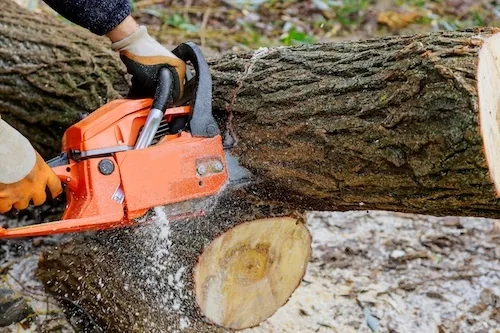
Make-safe deals with what is dangerous right now: the weight on the roof, the limb hanging over the path, the trunk blocking the driveway. Wood may be cut and stacked on site rather than removed straight away.
Clean-up comes after, on a second visit if needed: removing the stacked wood and debris, deciding what to do with the rest of the tree, and grinding the stump if the whole tree has gone. Splitting it this way gets the danger dealt with sooner, and gives you time to talk to your insurer before agreeing to the bigger work.
If the remaining tree has lost a large part of its canopy or has damage at the base, tree removal may be the sensible next step. The arborist will tell you what they see.
Photos and your insurance claim
Insurers usually want evidence of what happened and what it damaged. Before anything is moved, and only from a safe distance:
- photograph the whole scene from a few angles, showing the tree and what it hit
- take close-ups of damage to the roof, walls, fence, car or other property
- photograph the base of the tree and the broken ends of limbs, which can show whether it was healthy
- note the date and time, and keep any weather warnings or news from that day
- keep a copy of the arborist's written quote and invoice
Ask your insurer whether they need to approve the work first, and whether they cover removing the whole tree or only the part that caused damage. Policies differ, so it pays to check rather than assume.
What storm work costs
Emergency and storm jobs are priced on site, like any other tree work. They can cost more than a planned removal of the same tree, because broken wood under tension takes longer to rig and cut safely, and there may be a roof, car or fence to work around. As a 2026 guide, general removal prices start around $400 to $1,000 for a small tree and reach $2,500 to $6,000 or more for a large gum or pine close to the house. The tree removal cost guide has the full bands. Ask for the quote in writing so you can pass it to your insurer.
Getting ahead of the next storm
Most storm damage comes from trees that already had a problem: dead limbs, a split fork, a heavy canopy on one side, or roots damaged by trenching or paving. A check and some tree pruning in autumn, before the first winter fronts, can remove the branches most likely to come down. Trees over the house, the driveway and play areas are the ones to look at first.
Some councils require approval for certain trees even when they have been damaged, so if a significant tree is involved, check with your council or read can I cut down a tree in Perth before anything beyond the make-safe goes ahead.
We ask the arborists and contractors we work with to hold the public liability cover the job needs. Ask to see the certificate before work starts.