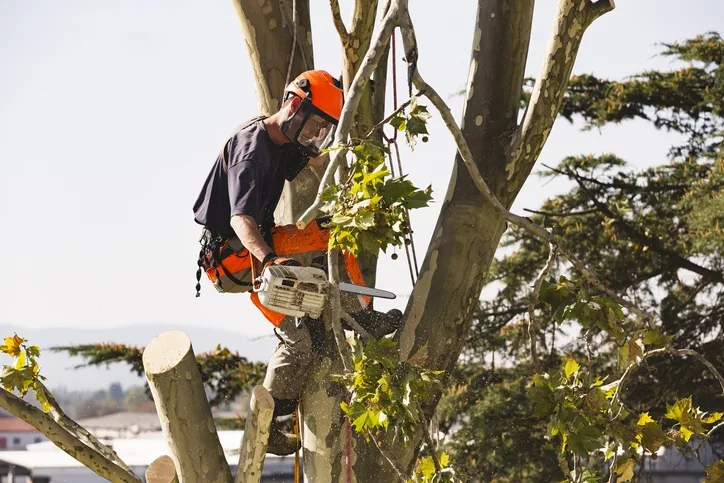
What Perth people usually mean by lopping
In Perth, "tree lopping" is the everyday word for making a tree smaller. When someone calls about lopping, they usually want one of these:
- the tree lower so it stops shading the house, the pool or the solar panels
- branches taken back off the roof, gutters or the neighbour's side
- a big, heavy tree made lighter before winter storms
- a tree kept but brought back to a size that suits the block
All of those are fair goals. The question is how the cutting is done, because the same request can be met in a way that helps the tree or a way that ruins it.
Lopping, topping and pruning: the honest difference
The words overlap, so here is how we use them.
Topping is cutting large branches or the main stem back to stubs, at whatever height looks right, without regard to where the tree can grow from. It is fast and it looks dramatic on the day. It is also the thing arborists warn against.
Crown reduction is what good lopping should be. Each limb is shortened back to a fork or a side branch big enough to take over as the new tip. The tree ends up smaller but keeps its natural shape, and it can close over the cuts.
Pruning is selective work on a tree that is not necessarily too big: dead wood out, crossing branches removed, the canopy thinned or lifted. See tree pruning for that side of things.
| Topping | Crown reduction | Pruning | |
|---|---|---|---|
| Aim | Quick size cut | Smaller tree, same shape | Healthier, safer tree |
| Where cuts go | Anywhere, often to stubs | Back to a fork or side branch | Branch collar or growth point |
| Regrowth | Fast, dense and weakly attached | Slower, from the kept branches | Controlled |
| How long it lasts | Often needs redoing within a few years | Several years for most trees | Varies by tree |
| Risk later | Higher, from decay and weak regrowth | Low if done well | Low |
Why topping backfires
Cutting a tree to stubs removes most of its leaves in one go. The tree responds by pushing out a flush of new shoots from just below each cut. In eucalypts these shoots grow from buds under the bark, and they are only attached to the outer layer of wood rather than properly anchored.
Over the next few years those shoots grow long and heavy, all crowded together at the stub. At the same time, the big wound at the end of each stub cannot close over, and decay works its way down into the limb. The result is a tree that is taller and bushier than it was, with heavy branches sitting on rotting stubs. That is exactly the kind of tree that drops limbs in a winter front.
Topping also tends to cost more over time. The tree needs cutting again sooner, the regrowth is harder to manage, and the tree may end up needing removal anyway.
What a proper reduction looks like
A climber or a crew working from an elevated platform works around the canopy, shortening each limb back to a side branch that is growing in a useful direction and is big enough to take over. Cuts are made cleanly outside the branch collar so the tree can seal them. Dead, split and rubbing branches usually come out at the same time.
Done well, the tree looks like a smaller version of itself rather than a hat rack. You should be able to see the new outline, with no bare stubs sticking out of the top.
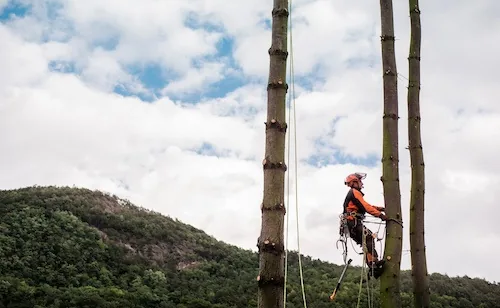
Heavy reductions are sometimes spread over two visits a year or more apart, particularly for older trees or natives that do not tolerate a lot of cutting at once. The arborist should explain this in the quote.
Fixing a tree that was topped years ago
Plenty of Perth trees were topped by a previous owner, and now carry a thicket of tall, crowded shoots growing out of old stubs. These trees can often be brought back into a safer shape over a few visits. The arborist selects the strongest, best-placed shoot on each stub to become the new limb, thins out the competing shoots around it, and checks the old stubs for decay. It takes patience, but it is usually cheaper and less disruptive than removal, and the tree slowly regains a natural form. If the stubs have rotted badly, removal may be the safer option.
Trees that get lopped most in Perth
- Eucalypts. Flooded gums, lemon-scented gums, sugar gums and planted eastern-states species often get too big for suburban blocks. They can be reduced, but the cuts need to go back to decent side branches, and heavy cuts on old gums are risky.
- WA peppermint. Very common across the western and southern suburbs. It handles reduction reasonably well and is often cut back from roofs and gutters.
- Cape lilac, jacaranda and liquidambar. Deciduous and semi-deciduous trees that are often reduced to let winter sun through. Jacarandas in particular respond badly to topping and are best reduced lightly.
- Fig and camphor laurel. Large, vigorous trees that get reduced to control spread and root size near the house.
Two common Perth trees cannot be lopped. Palms grow from a single point at the top, so removing the head kills them; the choice is cleaning out dead fronds and seed stalks or removing the palm. Norfolk Island pines permanently lose their shape if topped; they can have lower branches removed, but reducing the height is not really an option.
When reduction is not enough
Sometimes the tree is simply too big for where it stands. If a tree needs cutting so hard that there would be little canopy left, or it is already decayed, split or leaning, a reduction will not make it safe. In that case tree removal and planting something better suited to the space is usually the better long-term answer. Ask the arborist to talk you through both options if you are on the fence.
What lopping costs
Reductions are priced on the job, not per hour or per tree. The size of the tree, how much comes off, access, and how much of the work is over a roof, pool or fence make most of the difference. As a 2026 guide, reducing or lightly lopping a small tree in an open backyard often starts around $300 to a few hundred dollars, while reducing a large mature gum close to the house can run from several hundred dollars to a few thousand. Those are planning figures only; the written quote after an on-site look is the real number. The tree removal cost guide includes pruning and lopping alongside removals.
Before you book
- Check the rules. Some councils require approval before certain trees are heavily cut or removed. Our guide to cutting down a tree in Perth explains what to check.
- Power lines. Trees near the power line to the house need someone authorised to work near live lines. Tell us about any wires when you ask for a quote.
- Neighbour's tree. If the branches come from next door, have the conversation first. Our guide to neighbour tree disputes covers overhanging branches and who pays.
- Say what you are trying to achieve. "Winter sun on the back room" or "off the roof by a metre" helps the arborist more than "take a third off".
We ask the arborists and contractors we work with to hold the public liability cover the job needs. Ask to see the certificate before work starts.