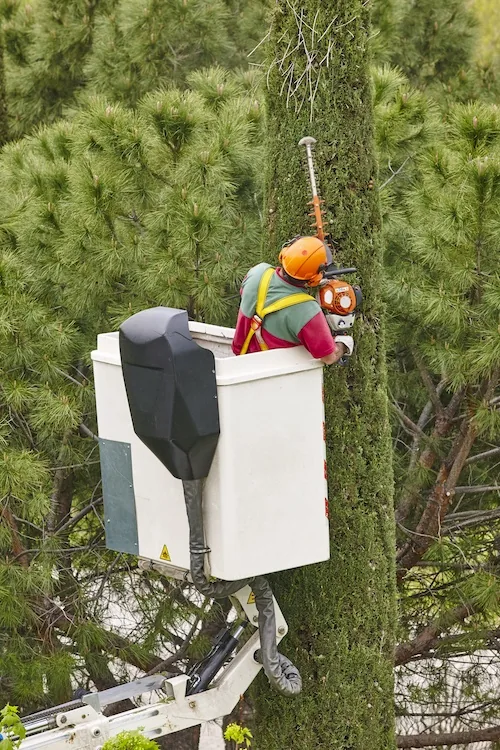
What pruning is for
Pruning is selective cutting. Rather than making a tree smaller all over, the arborist removes particular branches for particular reasons: they are dead, they are rubbing on the roof, they are growing in the wrong direction, or the canopy is so dense that it catches every gust of wind.
Done well, you often cannot tell at a glance that a tree has been pruned. It just looks tidier, lets more light through and stops dropping things on the car. Each cut is made back to a growth point or just outside the branch collar, the slightly swollen ring where a branch joins a larger one, so the tree can seal over the wound.
If what you actually want is a smaller tree overall, see tree lopping, which covers crown reduction and why topping is a poor substitute.
The main types of pruning
Deadwooding
Taking out dead, dying and broken branches. This is the single most useful piece of maintenance for big Perth trees, especially eucalypts, which shed limbs as they age. Dead branches over a roof, driveway, pool or play area are the first priority. The arborist will usually also note anything else of concern while up in the canopy, such as cracks, cavities or split forks.
Crown thinning
Removing a portion of the smaller inner branches throughout the canopy. It lets light and air through, reduces the weight at the ends of long limbs, and lets wind pass through rather than pushing the whole canopy like a sail. Thinning is common on dense trees like WA peppermints, figs and camphor laurel. It should be even and moderate; stripping out all the inner growth and leaving foliage only at the tips, sometimes called lion-tailing, makes branches more likely to break.
Crown lifting and clearance
Removing or shortening the lower branches so there is clearance underneath. This is the work most suburban blocks need: branches off the roof and out of the gutters, headroom over the driveway and paths, and room for the bin truck on the verge side. Keeping branches clear of the roof also cuts down on leaf litter in gutters, which matters in bushfire-prone areas in the hills.
Trees near the power line to the house need someone authorised to work near live lines. Point out any wires when you ask for a quote rather than trying to clear them yourself.
Formative pruning
Shaping young trees so they grow a sound structure. This usually means choosing one main leader where two are competing, removing branches that cross or form tight V-shaped forks, and spacing out the main limbs along the trunk. A little formative work in a tree's first years can save a lot of expensive corrective work, or a removal, later on.
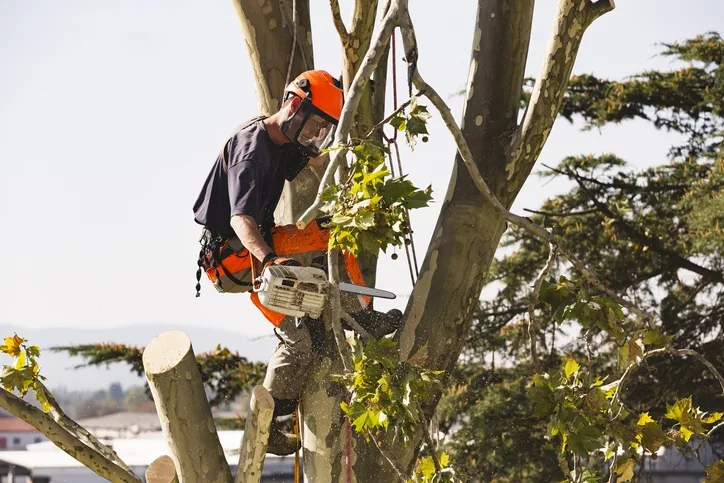
Pruning fruit trees in Perth
Backyard fruit trees benefit from pruning more than most, but the timing depends on the type.
- Apples and pears. Pruned in winter while dormant, when you can see the structure clearly. Aim for an open centre so light reaches the middle of the tree.
- Stone fruit. Peaches, nectarines, plums and apricots are often pruned in late summer or early autumn just after harvest, while the weather is dry, to lower the risk of disease getting into fresh cuts.
- Citrus. Lemons, oranges and mandarins need little structural pruning. A light tidy after the main harvest, removing dead wood, water shoots and branches touching the ground, keeps them productive.
- Mangoes, avocados and figs. Mostly pruned to control height so the fruit can be reached, usually after fruiting.
For small fruit trees many people do their own pruning. It is worth calling someone in for big, old or neglected trees, anything that needs a ladder at height, or trees that have been left to grow over sheds and fences.
Timing pruning around Perth's climate
Perth's long, dry summers and mild, wet winters shape when pruning is best done.
| Time of year | Good for | Go easy on |
|---|---|---|
| Winter (June to August) | Deciduous trees, pome fruit, structural and formative pruning | Nothing major, though wet ground can limit access |
| Spring (September to November) | Most general pruning and clearance work | Heavy cuts on trees in full flower |
| Summer (December to February) | Deadwooding and removing hazards | Heavy pruning in the heat |
| Autumn (March to May) | Stone fruit after harvest, clearance before winter storms | Big cuts late in the season on sensitive species |
A few rules sit on top of the calendar:
- Dead and dangerous branches come off whenever you notice them. Waiting for the right season is not worth a limb through the roof.
- Flowering trees like jacaranda and many ornamentals are best pruned just after flowering so you do not cut off next season's display.
- Heat stress is real. Heavy pruning in January removes shade from the trunk and root zone just when the tree is struggling for water. Keep summer work light and water the tree well afterwards.
- Get ahead of winter. Having big trees deadwooded and thinned in autumn means less for the first strong winter fronts to bring down.
How much should come off
Less than most people expect. Every leaf the tree loses is food it cannot make, and many WA natives resent heavy pruning. A good pruning job removes what needs to go and not much more. If a tree needs so much taken out that little canopy would be left, the arborist should talk to you about a reduction over several visits, or about whether the tree is worth keeping at all. Our tree removal page covers that side.
What to expect on the day
Most pruning jobs take a few hours. The crew sets up a drop zone under the tree and keeps it clear, so cars may need moving and pets should be kept inside. Smaller branches are dropped onto open ground; anything over the roof, pool or fence is tied off and lowered. Prunings go through the chipper as the work goes along. Before anyone leaves, walk around with the crew and check the clearance and the clean-up match what the quote said.
What pruning costs
Pruning is quoted per job after a look at the tree, because size, access and the amount of work vary so much. As a 2026 guide, a light prune or clearance on a small tree often starts around $300 to a few hundred dollars. Thinning, deadwooding or clearing a large mature gum over a house can run from several hundred dollars to a few thousand. Several trees done in one visit usually work out cheaper per tree than separate bookings. The tree removal cost guide covers pruning alongside removal and stump grinding.
Before you book
- Council rules. Pruning is not usually an issue, but some councils require approval before certain trees are heavily cut, including trees on heritage places or a significant tree register. Verge trees are managed by the council. See can I cut down a tree in Perth.
- Shot-hole borer. The whole Perth metro is a quarantine area for the polyphagous shot-hole borer, and there are rules on moving wood and plant material. If your trees show small holes, gumming or dieback, read our shot-hole borer guide before pruning.
- Describe the problem. "Branches on the roof above the bedroom" or "dead limbs over the carport" is more useful than a label.
We ask the arborists and contractors we work with to hold the public liability cover the job needs. Ask to see the certificate before any work starts.